

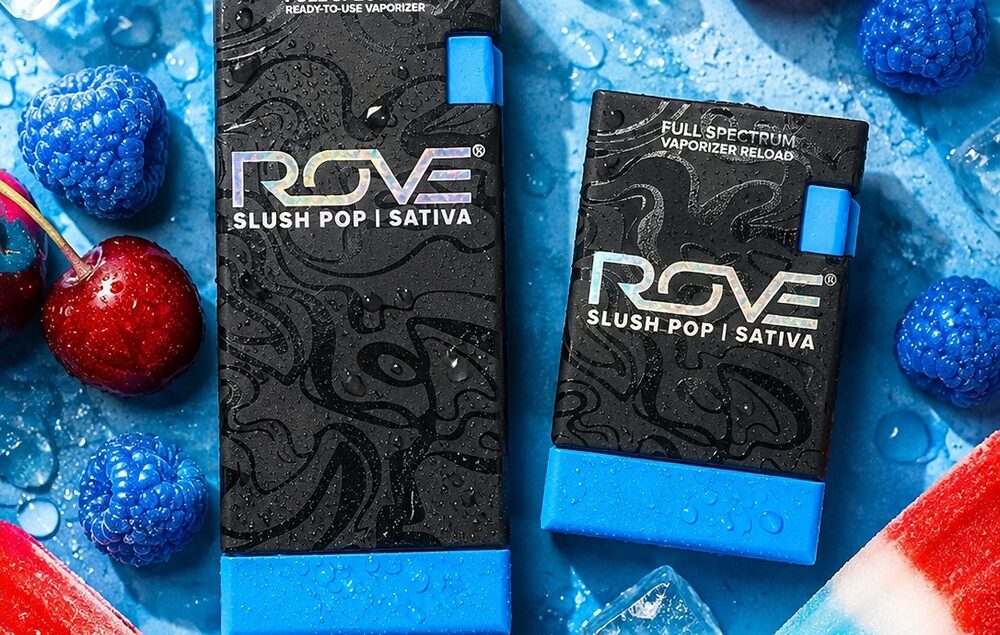
 “Premium” could be the most overused word in the cannabis vernacular.
Since the start of adult-use legalization, hundreds of brands across the country have targeted the top shelf, but very few have shown staying power or the ability to scale beyond a small batch, craft product.
As price compression has blanketed the industry, many premium cannabis brands have folded, while others have cut corners to stay in business and maintain their margins.
One glaring exception has been Rove.
While many multi-state brands have pulled back from highly competitive markets, Rove has continually expanded. In September, the company announced its entrance into Canada, adding to the 16 U.S. markets in which the brand operates. Rather than bowing to pricing pressure, Rove has doubled down on its commitment to quality, customer service and delivering an experience worthy of the “premium” label.
The result is one of the top-selling brands in the entire industry, and a company that recently celebrated 10 years in business.
Power of Premium
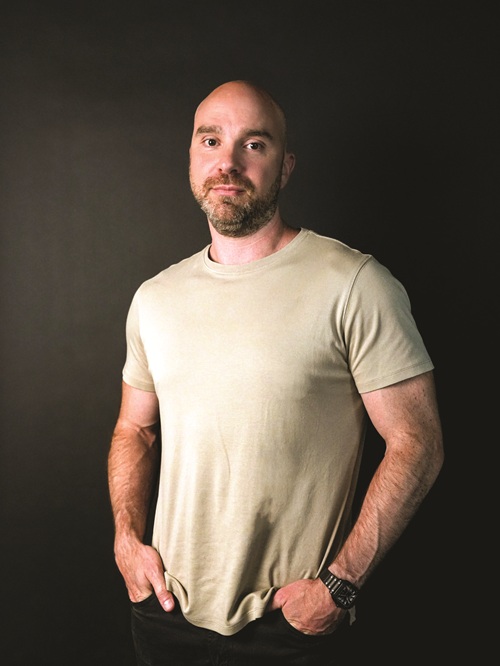
Rove president Paul Jacobson.
In an industry that is notoriously tumultuous, how has Rove succeeded where so many other companies have failed?
Rove co-founder and CEO Paul Jacobson won’t share the secret sauce, he jokes, but it’s really a multitude of factors, stemming from a deliberate approach to business and a painstaking attention to details.
And it starts with a clear definition of what it means to be premium.
“If you’re going to be a brand and use the word premium and live by it, it has to apply to certainly everything that’s customer facing, but hopefully everything in the organization is done with care,” he says.
Jacobson uses the analogy of an expensive bracelet. Gold, of course, is a premium metal, but to be a truly premium product, everything has to fit the bill. It’s the design, the latch, the packaging, the way it feels on a person’s wrist. The jewelry was probably purchased at a luxury retailer with extraordinary customer service and ambience.
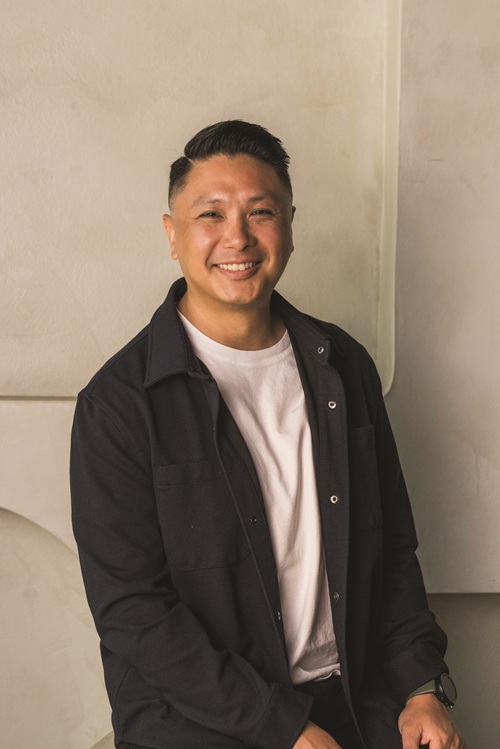
Vice president of sales and marketing Mark Hsieh.
“With cannabis, I think you can grow great cannabis and you can make great cannabis extracts, and for a lot of people in the industry, that’s their definition of premium cannabis,” he says. “For Rove, we always wanted all the parts, everything that ever touched the customer, to be premium.”
For more than a decade, Rove’s vape products have utilized metal and glass, even when most of the industry was using plastic. They feel heavier, more robust, more reliable. There’s less concern with the interaction between plastic and heat, less concern for a distorted flavor over time.
For the packaging, it’s solid and substantial. The thickness and the texture have to feel just right. There’s a comparison to Apple products, where the outside sleeve fits just perfectly over the inside box. And the cardboard and materials feel more substantial.
“You almost have a feeling like the air can’t find its way out,” Jacobson says. “We wanted that feel. We wanted the packaging to be good enough that you don’t just throw it away. You don’t tear it open and throw it in the trash. We want it to sit on your coffee table for months.”
Behind the Scenes
In some way, the customer-facing components of a brand are obvious and easy to control.
It’s what happens behind the scenes that truly elevates a product or experience.
Mark Hsieh, the company’s vice president of sales and marketing, says Rove’s quality control process is second to none.
Hsieh gives the example of Rove’s 2-gram blunt, a product that was basically in development for about two years before the company felt it was ready for market and in a position where it could be scaled across multiple markets, while retaining the consistency and quality the company is known for.
“Our internal standard for something we would put out is so high, and that’s also the reason why people trust our products,” Hsieh says.
While it might be tempting to chase the latest trends and hot product categories, “we’ve resisted the urge to do anything too rushed,” Jacobson adds.
Quality control is complicated by operating in more than a dozen states across the country — but that also makes it even more important. If a Rove customer from New York takes a trip to Las Vegas, the product needs to be consistent from one state to the next, despite being manufactured in different facilities, with different inputs, different environments, different rules and regulations.
“It’s a huge, never-ending task,” Jacobson says.
In setting up new markets, Rove has relocated current employees to get states up to speed and lock down the quality control program. Watching other brands take different approaches to expansion helped solidify the philosophy of needing seasoned veterans in each market to keep the standards consistent across state lines.
“We have refined our processes, but every new state has some unique thing,” Jacobson says, “and we’ve got to be creative and figure out how to take what the state is offering us and convert that into a product that is of a caliber and quality and taste that all our other states are offering.”
But, Hsieh says, no company is perfect. When a product has failed or a vape cartridge has clogged, those complaints go directly to Rove’s leadership team. They’ll often take the extra step of contacting the customer directly to understand the problem and make it right.
“It’s important to us that if someone’s paying the amount of money they are paying for a Rove product that it works and they are happy with it,” Hsieh says. “Otherwise, we’ll figure out how to fix that problem.”
And it’s not just for the consumer’s sake. Rove has a relationship with its retail partners to protect.
“These retailers are taking a chance on us by putting a more expensive product on their shelf,” he says. “It is incumbent on Rove to make sure that the product performs well and is bringing them business value and that we’re there to support them on the brand side with the education and the right marketing plan to make sure we’re all successful. Without the retailer being successful, we can’t be successful either.”
From his own experience, Jacobson says when he buys a product — any consumer good in general — and there’s a problem with it, “but then the company breaks their neck to take care of me, I’m a customer of that company for life,” he says.
Success and Expansion
Rove executives make it clear their goal is to turn the company into a global brand. And it’s clearly on the right path.
In September, the California-based company expanded into Canada, marking its first international foray.
Since launching in California in 2016, then taking its first steps out of state with Nevada the following year, Rove has continued its steady expansion through adult-use and medical markets across the country, 14 more to this day: Arizona, Colorado, Illinois, Maryland, Massachusetts, Michigan, Mississippi, Missouri, New Jersey, New York, Ohio, Oklahoma, Rhode Island and Washington. More markets are on the horizon.
Rove ranks in the top 10 among vape brands in 12 of the 16 U.S. markets in which it operates, including seven states where it’s in the top five, according to information from Hoodie Analytics.
The company’s best-selling products are melted diamond vaporizers, even in states where price compression reigns supreme: the average retail price for Rove’s 1-gram melted diamond vaporizer is $35-40 in Michigan, $45-50 in California and $55-60 in Washington. Over the past year, Rove has generated $34 million in retail sales in California and $17 million in Michigan. Washington, a relatively new market for the company, has generated $1.5 million in the past 12 months, a projected growth rate of 350% from 2025 to 2026.
“With us having gone through 10 years of this industry, I think it’s really important for Rove to make sure we’re continuing to innovate,” Hsieh says. “There’s going to be another ‘next big thing’ in cannabis, so we need to be able to adapt as much as possible.”