

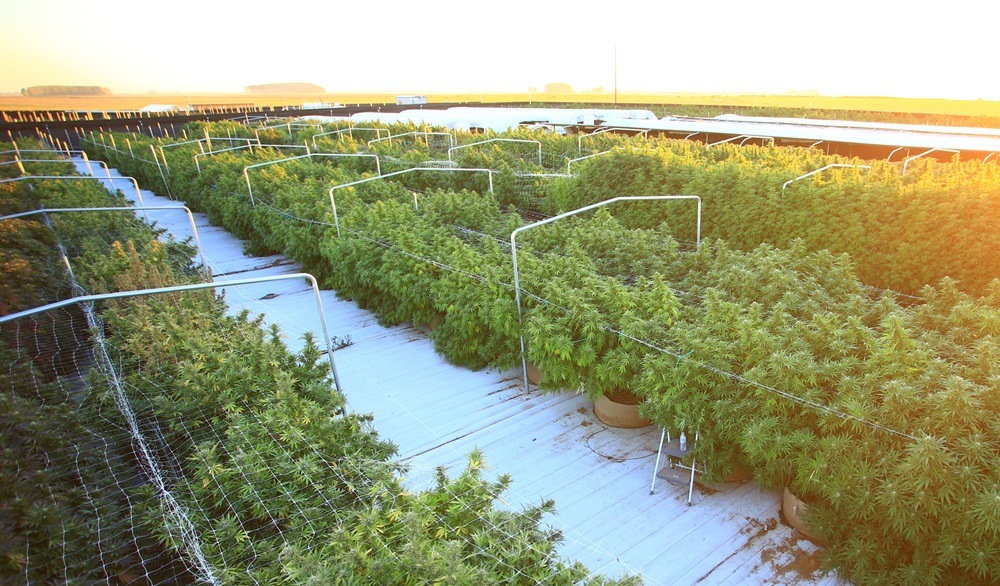
 In North-Central Washington, the Okanogan County Commissioners are considering an ordinance that would greatly restrict the operations of legal, licensed cannabis businesses that contribute tens of millions of dollars to the local economy and account for roughly 6% of all jobs in the county.
This has to be one of the most blatant and irrational examples of Reefer Madness that I’ve seen since Washington and Colorado voters approved the legalization of adult-use cannabis during the 2012 election.
Show me another legal industry that is shackled by this prohibition: “No new construction, expansion, alteration or addition to existing cannabis operations is permitted.”
One would think a county that ranks 38th among 39 counties in the state for average weekly wages or 24th in unemployment would be desperate for any signs of economic development. If desperate is too harsh of a reaction, you’d think cooler heads would prevail and settle for, at the very least, being moderately accommodating.
Instead, Okanogan County does the opposite. Jobs? No, not for us, please. Economic growth? No, we’d rather be known for poverty and hopelessness.
I’m reminded of the great Jack Nicholoson line from the film “As Good As It Gets”: “Sell crazy somewhere else. We’re all stocked up.”
And while I’d be perfectly happy to rant and rave about how stupid this Okanogan County proposal is, even with nothing more than ideology to guide my words, I don’t have to. Okanogan County has provided all the evidence and statistics I could ever want in a very thorough and professional economic analysis of the cannabis industry’s local impact.
According to the report, in 2025, cannabis production in Okanogan County directly accounted for: 511 annual jobs; $15.37 million in earnings; $54.1 million in economic output; $410,000 to county and municipal revenues through taxes and fees from 2024.
Okanogan County spent about $200,000 on this analysis from the Oregon-based firm Evergreen Economics — only to ignore every benefit the legal, regulated cannabis industry provides the region. (The full report, linked here, is worth reading for anybody in the industry; it provides a well structured counterargument to anybody trying to prevent commercial cannabis enterprises from their jurisdiction.)
It’s also worth noting, as the report indicates, that since cannabis was legalized, the crime rate in Okanogan County has decreased to its lowest level in a decade; cannabis use by youths has decreased; unemployment decreased from 6.9% to 5.4%; and the poverty rate has decreased by 6.5%, outpacing the state and nation on average. None of these socioeconomic trends can be directly attributed to cannabis, but clearly, any attempt to link cannabis with crime, delinquent youths or a lazy workforce is nothing more than old-fashioned fear mongering. It’s contrarian to common sense and standing in the way of progress — and doing so at a time when most of the nation is moving slowly but steadily toward acceptance.
I can’t remember an instance when this old idiom rang more true: the commissioners seem willing to cut off their nose to spite their face. Talk about being guided by ideology, rather than facts and evidence. Talk about being guided by ideology, rather than facts and evidence.
I will remind the commissioners that Okanogan County voters back in 2012 supported Initiative 502, the statewide ballot measure to legalize recreational marijuana, by a margin of 51.4%.
And Okanogan County is exactly the type of place that should be embracing the industry — and specifically, embracing those individuals and companies that are playing by the rules, rather than disappearing into the shadows of the black market. It is geographically the largest county in the state, and it’s one of the most sparsely populated. There’s a good reason Okanogan County is one of the largest cannabis production regions in the state, with 111 cannabis producers and processors registered in 2026.
I won’t spend a lot of time going into the details of the ordinance, but I will link to the full document here, for those interested.
But I want to highlight one additional quote from the proposal, just to show how asinine this is: “No building permit, shoreline permit, floodplain development permit, or other development permit approval shall be issued for any cannabis operation except where required solely to correct documented life-safety hazards or to bring an operation into compliance with County Code.”
Public comments were due June 1, with a commissioners meeting scheduled for June 8 to discuss.
This particular issue is hyper local to one of Washington’s smaller counties in terms of population, but huge in its significance to the state’s cannabis economy. But it’s a reminder of the dogmatic, anti-cannabis forces in play throughout the country and the legal industry when three men hold power and refuse to be swayed by facts or cogent arguments.
If this can happen in Okanogan County, where all the evidence points toward the positive impact of cannabis, it could literally happen anywhere.
Garrett Rudolph
Editor in Chief